
Armagnac 101

LibationsSpokane

Armagnac 101 cover

In general, the "safest" type of brandy you can buy is a Cognac. Go with a VSOP or (even better) an XO and you will be fine. Sure, there are "generic" brandies that are equally good or even better than Cognacs, but to be the Cognac variety you need to go through strict controls and, of course, be from the Cognac region of France. With a Cognac you know what you get. With a "generic" brandy you don't.

There are, however, other varieties of brandy that are bound to regions and go through the same strict controls as the Cognac. In that sense they're equally "safe" to go with, if you like the varieties and if you can find them. Spokane isn't a brandy type of town, so at times the latter can be difficult.

A good Armagnac can easily be as good as a Cognac, and it also comes cheaper. This, I assume, is because it doesn't have the name recognition of the Cognac, even though Armagnac apparently was the first brandy producing region of France. Some will even claim that the Armagnac is better than the Cognac, but more about that in a bit.

Production of Armagnac and Cognac are similar, though the Armagnac is only distilled once as opposed to twice for the Cognac. While you would think this would make the Armagnac harsher, the aging process, which is similar to that used for the Cognac, mellows it and simply makes the flavors a bit different and, to some, more complexthan its more famous cousin.

Grading is nigh identical to Cognac:

  • VS: Mix of Armagnacs that are at least two years old.
  • VSOP: Aged for at least five years.
  • XO: Aged for at least six years.
  • Hors d'Age: Aged for at least ten years.

So why do some prefer the Armagnac to the Cognac? There are those who will claim the popularity of Cognac has sent it into a mass-production spiral which makes it dull and predictable. It is true that it is mass-produced, and production is probably modernized to a level an Armagnac producers can't (afford to) get to, but I am unsure if its quality has gone down. Possibly for a VS, but plenty of producers -- including big names like Martell, Hennessy and Courvoisier, as well as boutique shops like Hardy and Larsen -- make some amazing brandies if you go up to the VSOP and XO.

With that said, from a personal perspective, I can see why some prefer an Armagnac. The single distillation in oak barrels really does work to its benefit in terms of having somewhat more depth to the flavors. And note that a VSOP Cognac is aged for a minimum of four years; a VSOP Armagnac for five. That's a good bang for your bucks.

To add to that, the Armagnac is said to have great heart benefits. A study has shown the aging process of the product is the reason behind this, and the Armagnac region has the lowest amount of heart issues per capita anywhere in the world. True fact.

As for serving Armagnac, there is the age old argument with it as there is with Cognac: What's better, the snifter, the tulip glass or the Champagne flute? The answer is: The argument will keep going for an eternity, go with your personal preference. (I prefer a small snifter.)

Drink the Armagnac like you would a Cognac or any type of brandy. Small sips over a long time. Swirl the Armagnac around your mouth; it's quite pleasant.

Some like a small splash of water or an ice cube in the drink. Personally I prefer it neat, but hey, whatever floats your boat. In the warmth of summer I don't see the issue putting an ice cube in the drink.

There aren't many types to choose from in our caringly controlled Washington liquor stores, but the Leriche VSOP is a good and affordable starting point at around $30 per bottle. It's smooth and has a nice flavor.

Fun fact: When the Armagnac is bottled, it's bottled. Keeping it in the bottle for 15 years isn't going to improve its flavor; opening it isn't going to affect its taste anytime soon. Just drink the damn thing.

On borders and food

#SpoCOOLSpokane

Our previous mini-rant on how "Greek yoghurt" is really not Greek at all got the ol' cogs turning around discussions Team SpoCOOL has had on many occasions. Here in the USA people tend to strongly define anything by political borders. I'm sure we've all met people claiming to be "23% German, 12.5% Swedish, 1.734% Chinese, etc." There's an underlying problem with that, seeing that people lose quite a bit of their actual American identity, but that's a discussion for another time.

The jargon carries over to food, as we all know. Swedish pancakes. Belgian waffles. Canadian bacon. So on and so forth.

The thing, of course, is that these dishes really didn't have their origins in the countries their American namesakes suggest. For the most part it'd be impossible to trace the history of the dishes properly, largely because political borders have shifted significantly over time. And, of course, that the dishes have been around in some form or other for a long time.

Using Swedish pancakes as an example: These type of pancakes can be found in most of Europe, heck, even the world. Here in the US many differentiate between the Swedish pancake and the French crepe. They shouldn't, as they're virtually identical. The French crepe, the Greek krepa, the Norwegian pannekake, the Russian bliny... You'll find subtle differences, but for the most part they're the same thing.

It gets more complicated.

Indian food is something we all enjoy, but do we enjoy North Indian cuisine or South Indian fare? The two are very different, more so than a crepe from France and a pancake from Sweden. Yet they're inside the political borders of India.

Of course, it all comes down to giving things, anything, names. That's fine. We need names, and we're not saying there's anything inherently wrong using names like Belgian waffles, though it probably would be better if the names were either a bit less geographical. Or, when talking about a country's cuisine, possibly even more specific. 

Regardless, we do think people would benefit from doing some basic research on various dishes. Not just to figure out the foods, but to learn more about political and geographical history. Broaden your horizon and all that jazz.


International Food Store

ShopsSpokane

International Food Store cover

It goes by many names -- different signs and flyers carry various names -- but in terms of Middle Eastern and halal food, no store in Spokane does it better than the International Food Store.

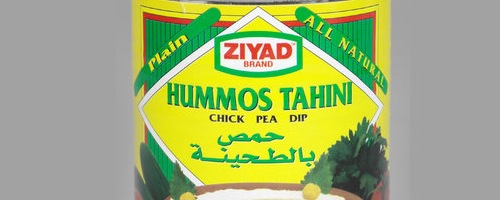
The selection here is pretty outstanding, and if you have any interest in authentic hummos tahini, Ziyad's canned stuff is probably better even than anything you can make yourself. There's a good choice of different types of pitas too, again all of high quality.

More important, to me at least, is the choice of "Greek" yoghurt. I use quotations around "Greek" as that's actually a common misnomer. Strained yoghurt -- which is what we call "Greek" here in the US -- has its origins in the Middle East. Traditional Greek yoghurt is not strained. Therefore "strained" yoghurt would be a better name for it.

Anyway!

International Food Store carries multiple brands of the extremely flavorful and fatty yoghurt and, as you only need to use a dollop  of it while cooking, a container goes a long way. (And you will never ever again use what Yoplait calls Greek yoghurt.)

They also carry hookahs ranging from $20 into the hundreds.

We like international markets quite a bit here at Team SpoCOOL, and International Food Store is one of the more interesting ones in town. A must if you are interested in Middle Eastern food.


Bon Bon Lounge

RestaurantsSpokane

Bon Bon Lounge cover

It is, apparently, Garland Week here at ye olde SpoCOOL, and why not? The neighborhood is going through a boom period, and is alongside the downtown core and South Perry one of the more interesting and vibrant areas in town.

Bon Bon is a classic and classy lounge. Think 40s/50s movie bars where Cary Grant and Jimmy Stewart would suave it up with Grace Kelly, and you have the general idea. Dan Spalding was responsible for lot of the interiors, and the space catches the classic movie theater lounge perfectly. (Wear your linen suit here, for full effect.)

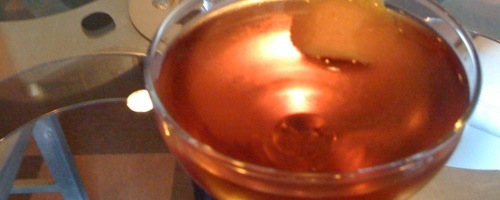
The cocktails follow suit; classic drinks, often with modern twists, all nicely mixed. My Negroni was very refreshing and came served in a cool coupe to boot. There are a handful of "specials" also, and Top That's Cane Flower was very tasty. Perfectly balanced in sweetness and citrusy flavors.

To top it off, Bon Bon also offers cheese and charcuterie plates from Sante. Nobody can complain about that. 

The only real issue with Bon Bon is that the drinks don't come cheap. A good cocktail rarely does, one might argue, and that's valid, but with assorted drinks crossing the $10 mark, well, it's not cheap fun, particularly in a neighborhood bar.

But hey, it's fun none the less.